
Let me tell you about one of my favorite members, Terri.
Eight years we've been working together. Eight years. And for most of that time, we were working around and between knee replacements, health scares, and just general life stuff. Easy to say that there were some sessions throughout the year where I wondered if I was actually helping her or if we were just going through the motions and on a path of maintaining together.
This wasn’t for a lack of trying. She is. Back then, and currently to this day.
But over my years of coaching, I have found that there's two versions, both completely acceptable, of trying. One is more about showing up and surviving the hour and the other is where it’s actually believing something on the other side of the hard work is waiting for you.
And for a long time, she was in the former.
As a coach, sometimes that's a hard place to sit.
What’s gratifying about being a coach is we sometimes see what someone is capable of before they do. We can see you slowly go from looking like Gumby to graceful gazelle, the weights that used to crush you start to move like butter.
What can be demoralizing is when we see it, while you're still looking at yourself as some previous, old version.
Each coach has their own way, but we do say it to you plenty of times. But there's a difference between a coach telling you you're capable and you actually feeling it in your body during a set that surprised you.
One of those changes how you show up next time. And the time after that. The other is just the Charlie Brown teacher yapping until the evidence randomly shows up one day.
The frustrating part, for both of us, can be that the evidence was building the whole time. In Terri’s case, she was getting stronger. Slowly, steadily, and undeniably.
But progress that happens gradually, like building strength without going through a “bulk” phase is really easy to not notice. You don't feel yourself getting stronger the same way you feel yourself being tired or sore.
So this creates a sort-of belief ceiling for yourself. And those can be a lot harder to break through than we want to admit.
I don't know exactly when it clicked for her. Maybe she does, but I don't think she does either. But at some point things started to click, and before too long we were advancing exercises at a clip we’d not done in some time. Her water breaks started to be quicker, she wasn’t checking her heart rate as often. The things that used to be hard started feeling different. Definitely not easy, but there was a different energy to it. And that difference mattered.
Over the course of a couple weeks I began to notice her effort uptick a bit. More noticeably. I could sense up inching closer toward lifting that ceiling.
And last week, she jumped through that ceiling.
Like literally. She jumped.
No it wasn’t a box jump, or even a complicated jump.
It was feet off the ground, air underneath, and a nice clean landing.
So clean, she barely recognized that she had just done something she hadn't done in 15 years.
She looked at me like — did that just happen?
Yup, sure did!
I've been thinking about this a lot since it happened, because it was so incredible to experience.
What it got me thinking about was a book I read last year called The Explorer’s Gene by Alex Hutchinson. There’s a section right before the end where he talks about what psychologist Michael Inzlicht calls the Effort Paradox.
The short version is: we don't find hard things meaningful despite the effort. We find them meaningful because of it. The struggle isn't the tax you pay to get to the good part. The struggle is actually part of what makes the outcome matter.
So why is effort so important? Because it’s what will drive progress, and progress is so much more motivating once you can actually feel it happening. Our brain, as awesome as they are, isn't wired to release dopamine just because something feels good. It releases dopamine when something is better than you expected. So if you’re trying to find motivation, what you thought you could do and what you just experienced, is where motivation comes from.
Which explains everything I watched happen with Terri. For a long time, she didn't have enough evidence to expect much. So every session was just... maintenance. Showing up. Which is genuinely hard and genuinely valuable, but it's not the same as training with a belief that something bigger is possible.
Once she could feel and see the difference in her own body, her expectations for herself shifted.
And when expectations shift, it makes it a lot easier and more enjoyable for the effort to shift right along with it.
The meaningful path isn't the one that feels good from the start. It's the one that's hard and uncertain and has you rekindling your relationship with Jesus at some points.
It demands something real from you.
And if you give it. Put forth the appropriate effort, then it will show you something about yourself you didn't know was there.
She didn't jump because it got easy. Two knee replacements after the age of 65 is not easy. She jumped because we built enough evidence over enough time to finally believe the risk was worth taking.
And when she landed, she looked like someone who just remembered something about herself that had been buried for a while, or thought to never be possible.
Look, I'm not saying you need eight years and a breakthrough moment to feel this. I’m saying that if your effort has a ceiling right now, it's worth asking yourself why.
Is it that you don't believe the outcome is possible yet? Is it that you haven't had enough sessions where you surprised yourself? Are you showing up and surviving instead of showing up and leaning into something that’s a bit difficult?
Real talk: effort follows belief. And belief follows evidence. Which means if you're not pushing hard enough to build evidence, the belief never catches up, and the effort stays stuck.
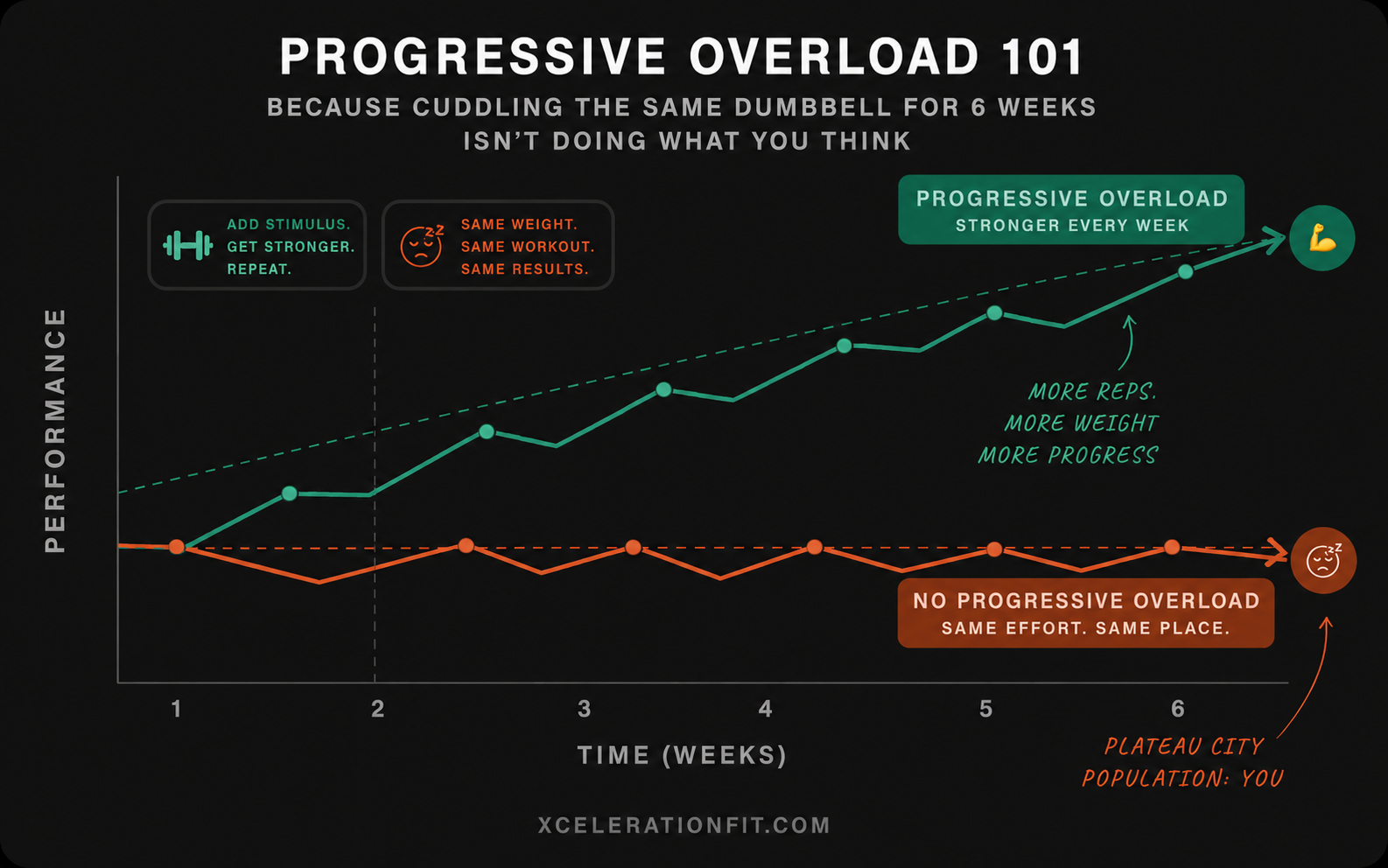
You have to make the first move. You have to decide to actually go for the extra round. To add the weight. To jump.
Once you do — even once — that big beautiful brain of yours starts to shift. And it gets a lot easier to do it again.








%20image.png)