%20image.png)

Let’s be honest.
You’re working hard.
You’re sweating. You’re tired. Your Apple Watch is impressed.
But your body?
Not changing much.
If you’re over 40 and feel like your workouts just don’t “hit” the way they used to, you’re not lazy. You’re not broken. And no, your metabolism didn’t pack up and retire early.
You just can’t train like you did at 28.
Good news? There’s a smarter way to do this.
Let’s fix it.
After 40:
That means random, high-intensity, “go until you drop” workouts stop working.
More effort isn’t the answer. Better strategy is.
A lot of people chase sweat.
Sweat feels productive. But sweat doesn’t build muscle.
Muscle is what keeps your metabolism up, protects your joints, and keeps you strong for life.
What you should do:
Ask yourself:
Are you actually getting stronger each month?
If not, that’s the problem.
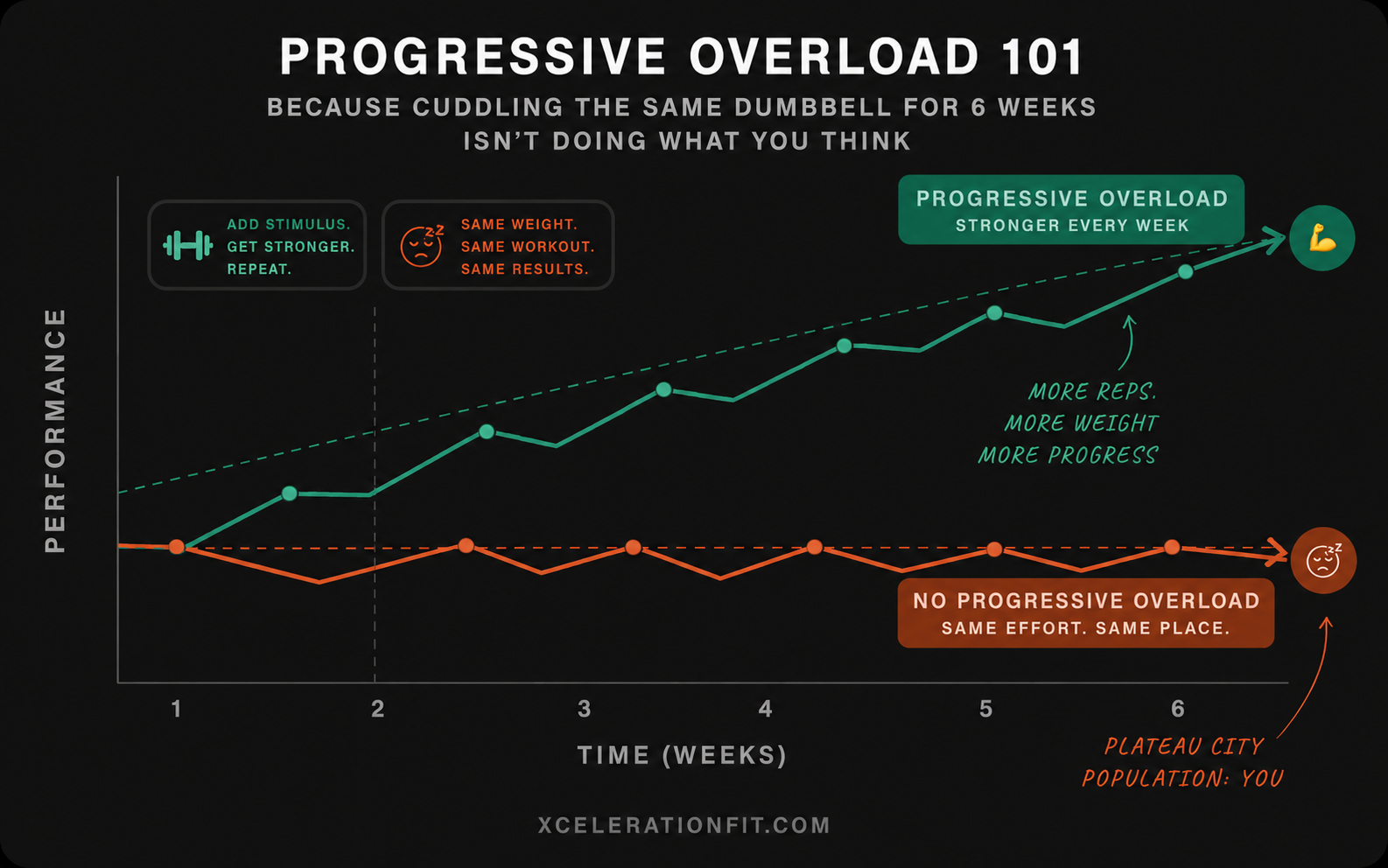
You don’t need harder workouts. You need ones that steadily progress you.
Random feels exciting.
But random doesn’t create progress.
If every week is:
Your body has nothing to adapt to.
What you should do:
Think about it like business.
You wouldn’t change your company’s strategy every Monday.
Don’t do it with your body either.
Here’s the rub! The big something most people over 40 stop doing:
Moving fast.
Power is how quickly you can produce force. It declines faster than strength as we age.
And it matters.
It helps with:
What you should do:
You don’t need to train like a pro athlete. But you do need to remind your body how to move with speed. Think fast, be fast!
Here’s a hard truth:
You can’t out-train bad sleep and high stress anymore.
In your 20s? Maybe.
Now? Not so much.
If you feel tired all the time, sore for days, or stuck, recovery might be the missing piece.
What you should do:
Recovery is not weakness.
This one hurts a little.
Calories burned are not the goal.
Muscle gained and strength improved are.
A workout that burns 700 calories but doesn’t build strength?
Short-term win. Long-term stall.
What you should focus on instead:
Those are real progress markers. Not your watch yelling at you. But are how are you measuring improvement?
After 40, under-eating protein is common.
So is “I barely eat anything but can’t lose fat.”
Usually what that means is:
What you should do:
Simple isn't sexy, but it sure does work.
Guessing leads to frustration.
Data leads to direction.
Instead of saying, “I feel like nothing’s working,” ask:
Emotion is usually what drives the “I just need to try harder” mindset.
Here’s the real mindset change:
After 40, fitness becomes less about intensity…
And more about intention.
Less about surviving workouts…
And more about building capacity.
Less about proving something…
And more about protecting your future.
You don’t need to grind harder.
You need to:
Pick 2 of these to focus on for the next month and see what you're capable of.
You’ll feel stronger. Leaner. More confident.