
It's summer. The Michigan weather has finally turned and you've finally got a rhythm going. You're showing up to the gym, you're hitting your protein, you're lifting things you wouldn't have touched a couple of months ago.
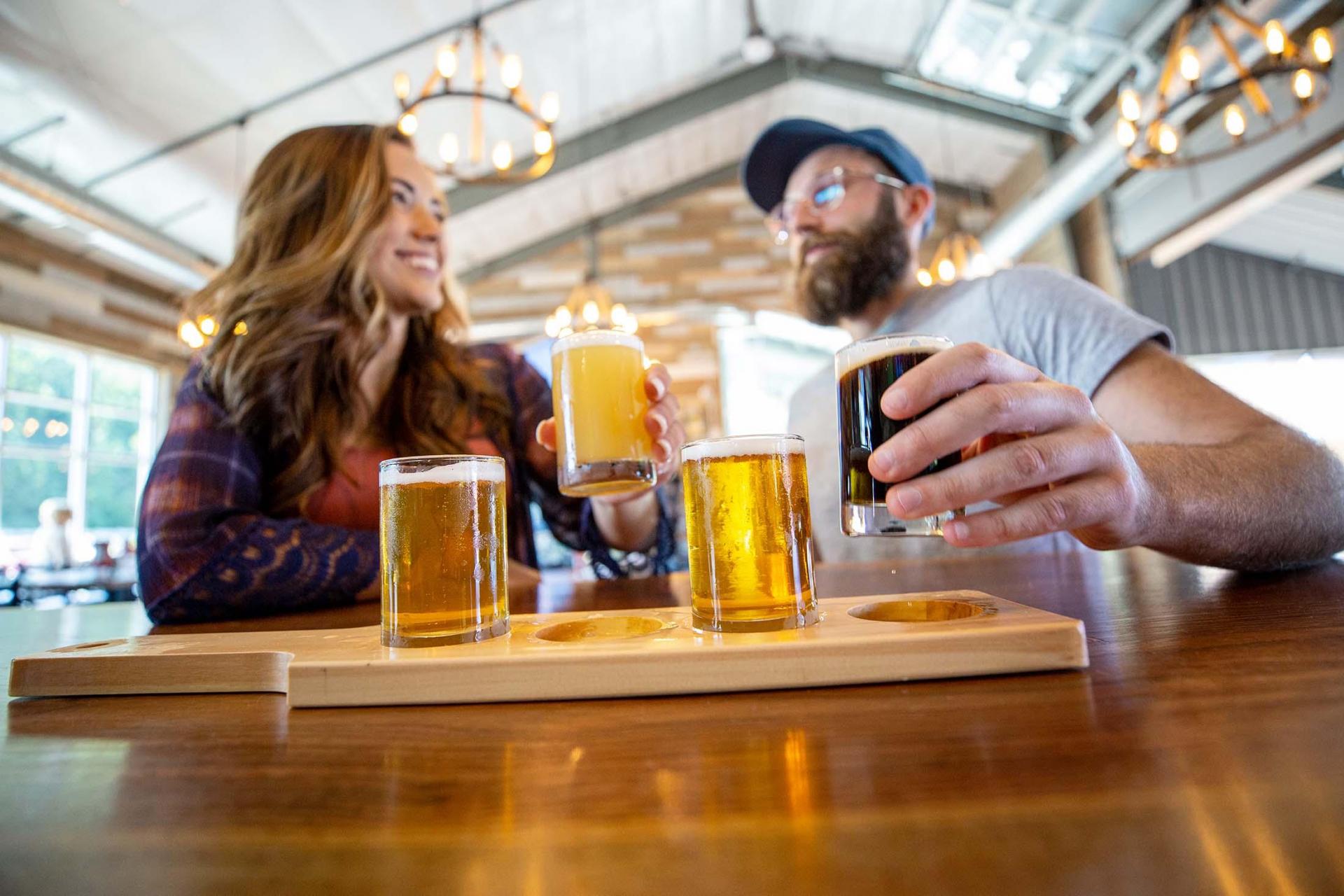
All in all, you feel good. And because you feel good….and because it’s not raining sideways, Friday turns into a glass of wine or refreshing beer on the patio. Then so does Saturday. Then it's a random Tuesday, because hey, you earned it, and the rest of the week will be crappy right?
Does that sound like you? Sure as hell sounds like me. I mean, we all get like this once summer hits. I get like this.
Now let me tell you about my friend’s mom, Lisa, who is lakeside living and her summers go exactly that.
For one whole summer, she did everything right. She committed to three mornings workouts a week, with no excuses. She needed to hit at least 100g of protein on more days a week than she misses. By August, she was lifting weights she wouldn't have come near in June.
We were excited to see what her DEXA scan would show in September, and it wasn't quite the story she expected. Her strength was up. But, her muscle had barely moved. So we sat down to figure out why. It wasn't her training, and it wasn't her protein.
It was the part of her summer she never thought to mention. The patio. The fireside chats. The wine on Friday. The "I need this" that, by July, had quietly turned into three or four nights a week once the weather got good.
She wasn't drinking heavily. She was drinking like a normal 55-year-old on a Michigan summer night. Unfortunately that's enough to quietly sabotage the exact thing she was working so hard to build.
We all have heard by now that our body doesn’t have the best reaction to alcohol. But why is that? What is going on that it stunts progress so much?
When you finish a hard lift, your body switches on a repair process called muscle protein synthesis (MPS). That's the mechanism that turns the work you do in the gym into actual muscle.
You workout, you eat your protein, and over the next day or two, your body rebuilds you stronger than before during the night when you get a good night's sleep.
Alcohol gets too involved during that recovery and repair window.
There's a study I came across in grad school that stuck with me. Researchers took trained men, ran them through a hard workout, and then gave them one of three things: protein, protein with alcohol, or carbs with alcohol. Then they took real muscle biopsy samples to measure the repair directly. Adding alcohol cuts muscle protein synthesis by 24%. The version with no protein dropped it by 37%.
Now, fair warning: it was a big amount of booze, somewhere around a dozen drinks. So no, two glasses of wine are not doing exactly that to you. But the take home point stays the same, even when people ate the right amount of protein, the alcohol blunted the response anyway. The protein only didn't generate the same results.
Derived from that study, a young researcher published a review in 2020 where they pulled together a dozen of these studies and conclusions all landed in the same spot. A drink or two didn't wreck strength or power the next day. But the things that move the needle long term, were moved in the wrong direction. Meaning that the repair process, and the balance between testosterone and cortisol play an important role.
To put it simply: You busted your butt in the gym. But you’re only getting about 80% of the benefits, possibly even less if you aren’t hitting at least 100g of protein.
Why? Alcohol has a few areas that it impacts us underneath that we don’t always think about:
Interesting, huh?
Okay, so should you care about this?
Yes.
Or at least everyone should have the awareness of the underworkings of what’s happening.
Somewhere around age 30-40, you start losing muscle whether you like it or not. It runs down about 3-8% per decade if you're not actively fighting it. That's called sarcopenia, and it speeds up after 60. It's the reason that, for people who never do anything about it, getting out of a chair or carrying groceries or catching yourself in a fall gets harder with age.
You're already swimming against that current. Lifting is how you swim hard enough to keep moving forward. So anything that quietly drags on muscle-building isn't just slowing you down. It's partnering up with a process that you have no control over, other than trying to slow that natural process.
However…..
The big-picture proof that alcohol causes sarcopenia is honestly mixed. One large study out of the UK found that the more people drank, the less muscle they had. But another big study, run over four years, found no penalty at all. In some groups, the moderate drinkers even looked a little better — almost certainly because the healthy, active, social people tend to be the moderate drinkers in the first place, not because the wine did them any favors.
So I'm not going to stand here and tell you that science has proven your glass of cabernet is shrinking your arms. It hasn't. But it has shown one thing clear as day: alcohol blunts the repair process your training depends on, and it does the most damage right around your workouts and your sleep. Whether that adds up to something you'd see on your next DEXA scan comes down to how much, how often, and how close to training.
I want to be very clear, this was not a "quit drinking" lecture. After twelve years of coaching adults, I can tell you the all-or-nothing routine is exactly what has people quitting everything by October. Just like you, I want to enjoy my summer, and find a way to do it by not accidentally taxing the work you're paying for.
So here areas a few easy moves:
Don't drink right after you train. Understand that the repair window is when alcohol does the most damage. If you lift in the morning, you've got all day for that window to do its job before an evening drink…less issue. If you lift at night, give it a few hours. Just putting some space between the two can be the single biggest win on this list.
Protect the night before a training day. The hit to your sleep is part of the cost. If tomorrow is a lifting day, that third glass tonight works against you twice — once on your recovery, and once on the sleep that drives it.
Count nights, not just drinks. For most of our members, the thing that quietly stalls progress usually isn't one big blowout. It's "just one or two" creeping from one night a week up to four the second summer shows up. Pick your nights on purpose. Don't let the season pick them for you.
Don't let the weekend erase the week. Three solid sessions, protein dialed in, and then a weekend that wipes out the recovery, that's the Michigan summer trap. You don't have to be perfect. You just need to be aware that you don't want Saturday quietly undoing Monday through Friday.
Use your data. This is exactly what a DEXA scan is for. If your strength is climbing but your muscle isn't budging the way it should, the answer is almost always in the stuff around your training — sleep, alcohol, stress. Lisa didn't quit a single thing. She moved her drinks off her training days, reined in the random weeknights, and her next scan showed the fruits of her labor.
A drink on a summer patio is not going to undo your training. Anybody telling you it will is selling you fear, and you need not listen to it.
But you’ve GOT TO UNDERSTAND the muscle you're building after 45 is harder to earn than it was at 30, and it's worth a whole lot more. It's the difference between being strong and independent in your 70s, or not. Alcohol has a real, specific, well-documented cost to the repair process behind that muscle. Now you know what that cost is, and roughly when it hits.
Which means you get to make a choice on purpose, instead of by accident. Enjoy your summer. Just don't let the part you weren't thinking about quietly tax the part you worked so hard for.
This week's challenge: Look at your next seven days. Find the one or two sessions that matter most to you. Then protect the night before them and the hours after them from alcohol.
— Coach Matt






%20image.png)